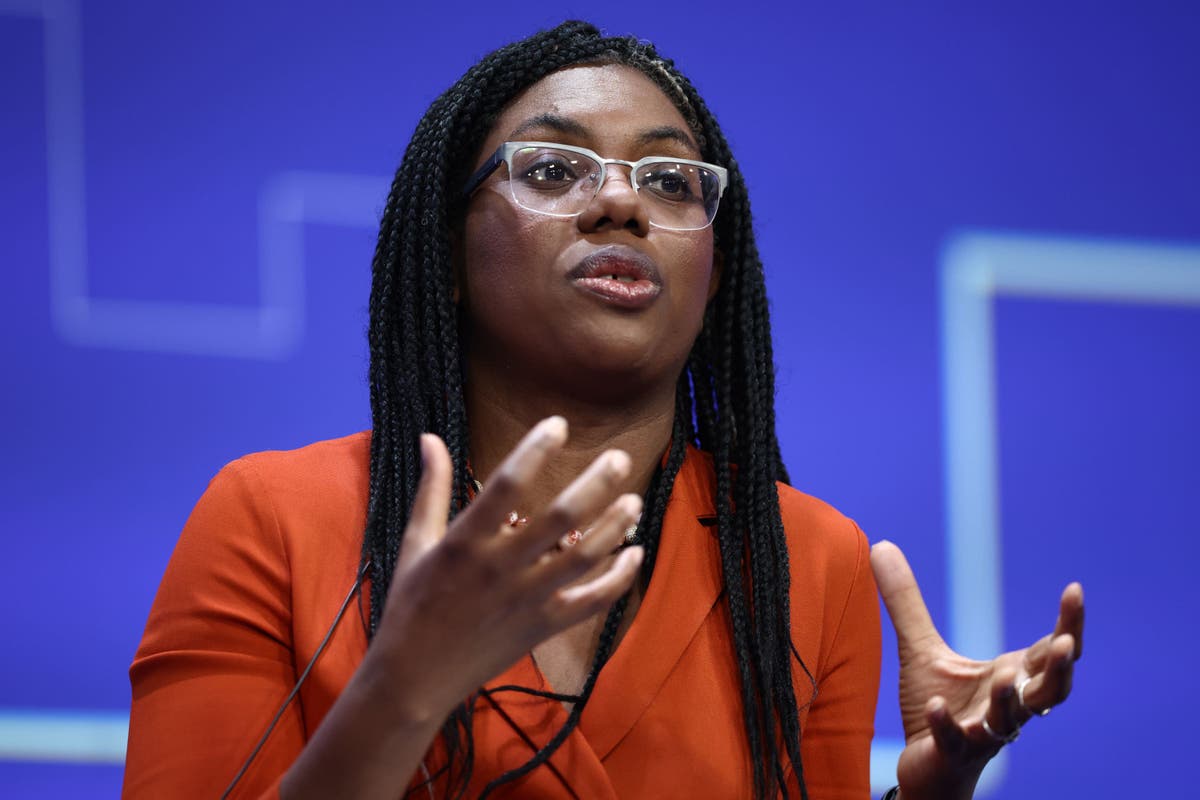
Cabinet minister Kemi Badenoch has said she is pushing for for “much, much tougher” immigration measures after the number of people coming to the UK soared to a record high.
The business secretary said she wanted Rishi Sunak to do “whatever it takes” to bring down net migration.
Her comments come as Mr Sunak faces a growing Tory revolt over immigration after shock figures showed net migration hit a new record of 745,000 last year.
Former home secretary Suella Braverman’s allies have also revealed an alleged pact between her and Mr Sunak in which he apparently agreed to a series of tough restrictions on migrants.
Speaking to LBC on Monday, Ms Badenoch said: “I am certainly in favour of us doing whatever it takes to bring the numbers down to a sustainable level. This is not something that I’m being mealy-mouthed about.
“I certainly will be pushing for the strongest measures possible. The migration figures that we’ve seen were from last year… I think that you will be seeing much, much tougher measures going forward.”
Ms Badnoch added: “This prime minister has said that we need to do whatever it takes on the boats, to get those planes flying, deporting people who shouldn’t be here.
“And when it comes to the people who we do let into this country, we need to make sure that they’re not undercutting our workforce, and that they are people who are coming to the UK to contribute and actually to help make our country better.”
Right-wing Tory MP Simon Clarke backed Ms Braverman’s call, saying: “Rightly so”.
He added: “It’s impossible to overstate how important it is that we pass the first test — namely legislation on illegal immigration that enables the PM’s recommitment to Rwanda to succeed.”
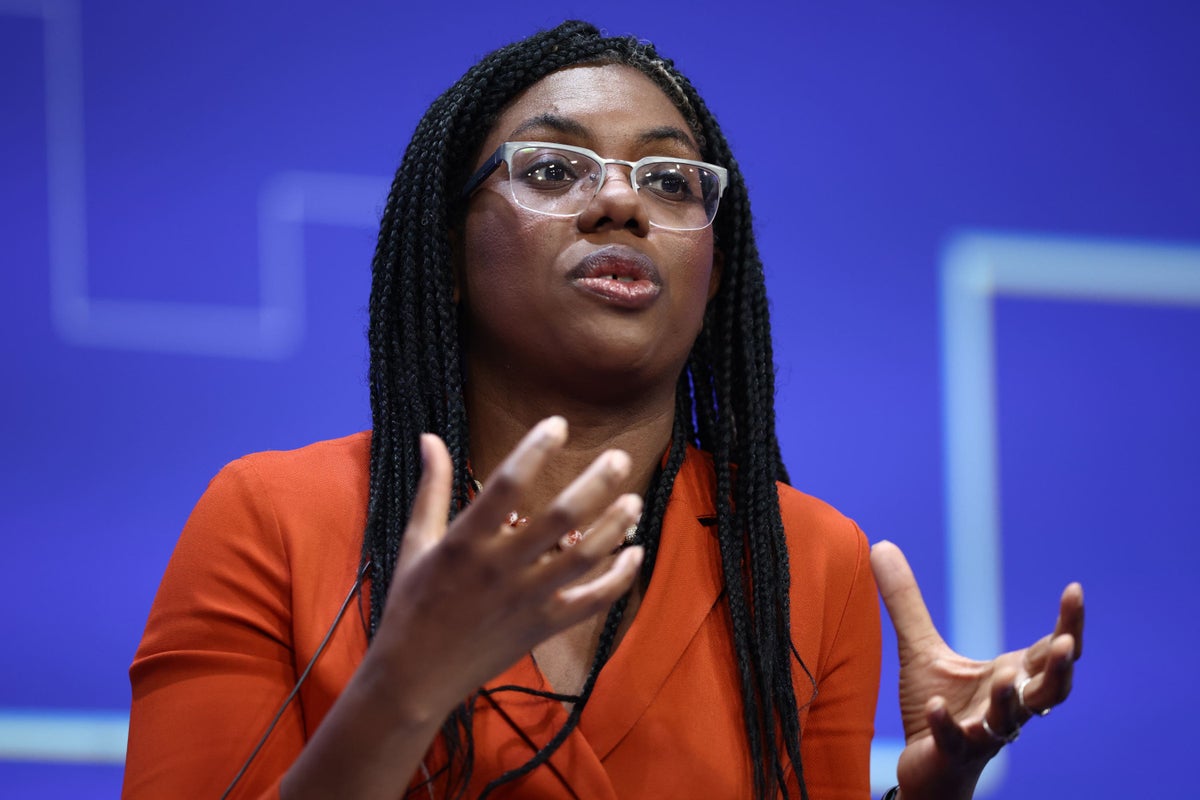
Business and trade secretary Kemi Badenoch (Henry Nicholls/PA)
(PA Wire)
Mr Sunak has warned immigration levels are “too high” and promised action, with No10 promising to leave “no stone unturned”.
On Monday morning, the details were revealed of an apparent secret four-point migration plan Mr Sunak is said to have agreed with Ms Braverman as he sought her support to become prime minister last year.
The PM promised to raise the salary threshold for migrants to £40,000 as part of a series of measures to bring down migration, Ms Braverman’s allies said.
Other parts of the plan included closing down the graduate visa route, restricting the number of dependents migrants can bring to the UK and prioritising overseas students applying for Russell Group universities.
Mr Sunak did not sign the deal, but agreed to it verbally on multiple occasions, allies of Ms Braverman told The Telegraph.
Ms Braverman first claimed she had a pact with Mr Sunak in a stinging letter to the PM after she was sacked as home secretary this month. She branded her ex-boss a failure and accused him of betraying the deal, suggesting he “never had any intention” of keeping the promises.
Prime minister Rishi Sunak is under pressure over net migration figures (PA)
(PA Wire)
Ms Braverman’s support in last October’s Tory leadership contest was seen as crucial to Mr Sunak’s victory, but in her letter she revealed she had agreed to serve as home secretary on “certain conditions”.
That agreement was a “document with clear terms”, she said, adding: “I trusted you.” But she accused Mr Sunak of “equivocation, disregard and a lack of interest”.
Asked about the deal, Mr Sunak told the Mail on Sunday: “Of course, you have conversations with people when you are in a leadership election and not just Suella.”
Asked if he was worried about her producing proof of the deal, he said: “That’s a question for her. I’m getting on with actually delivering things.”
Ms Braverman’s proposal was to raise the minimum salary threshold for skilled foreign worker visas from £26,000 to £40,000.
And she suggested replacing the two-year period during which graduates can stay in the UK and work or look for work with a four-rmonth period.
Levelling up secretary Michael Gove has suggested that the UK does not have enough housing to cope with net migration levels.
Asked if housing levels were not enough, he told Times Radio: “Yeah. In fact, I think actually the situation is, if anything, worse than you depict. It is the case that the migratory flows put more pressure on housing, but we haven’t built enough homes overall for generations.”