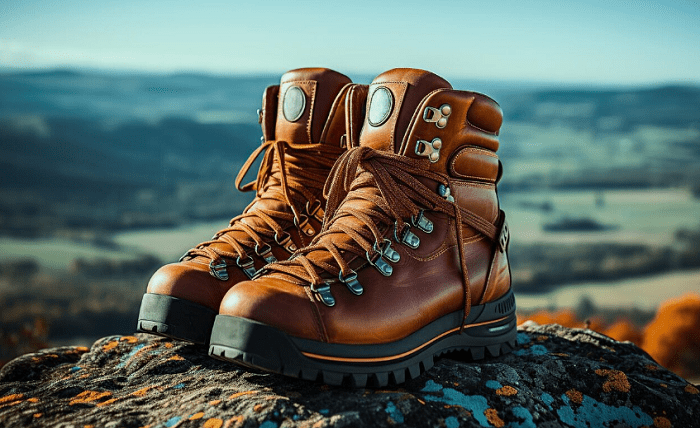
When shopping for hiking boots, it is not uncommon to get confused by the available options. The biggest battle will be choosing leather or synthetic fabric for the boots. Considering that the boots are a critical aspect of comfort and performance in your hiking expeditions, you must be careful not to compromise them. In this article, we will narrow down the comparison between these two options so you know which options are better for you. Read on!
1. Weight
In the modern market, there is a whole range of boots available. With the technology, the suede and nubuck leather boots have been made lighter to resonate with synthetic options. However, the full-grain leather boot is still very heavy in weight.
It may weigh a couple of pounds for each leg. The weight aspect becomes an issue if you are backpacking or hiking long distances, as you may tire your feet more easily. Nevertheless, for tough terrains, your feet will hugely benefit from the boots as they offer optimal support and comfort.
If you are looking to engage in an even hiking trail and want the lightest option, the synthetic boots may be ideal. This also works for shorter hikes on level ground as they are light in weight.
2. Water Resistance
Water resistance is one of the weatherproofing aspects that a hiking boost must possess. Most of the boots in the market are waterproofed using Gore-Tex or similar alternatives to ensure that the shoe is breathable and water resistant.
Leather stands out as a water-resistant material. It remains so even after the waterproofing treatment wears off. On the other hand, synthetic boots will not offer much water resistance after some time. If you want longevity in the boots, the synthetic option may not be your best bet, as you will need to waterproof them or replace them. The leather boots serve you for a long time with waterproofing and resistance characteristics.
3. Breathability
How breathable do you want the boots to be? While most people focus on getting the rainwater out of the boots, they forget that the shoes must also be breathable so that your socks and feet do not get waterlogged. Additionally, sweat and moisture are inevitable since the activity burns a lot of calories.
Quality leather is breathable; thus, it is a great option. On the other hand, synthetic fabrics are not the most breathable option. However, the boots are made with a breathable fabric to ensure moisture escapes and protects you from blisters. This enhances their breathability. For this aspect, both are at par.
4. Flex and Comfort
There is nothing as disappointing as picking out a great hiking boot only to find you cannot walk in it for more than half an hour without pain or discomfort. Comfort is vital in hiking boots, especially going long distances. It is a highly relative aspect as it depends on your feet’ properties, such as the shape.
Nevertheless, a leather boot will be stiff, requiring you to break in a shorter hike before a long one. After this, the boot should mold nicely in your feet so you can walk in them for hours. The stiffness may take some time to wear off, depending on the type of leather. For instance, the full-grain ones will retain a good level of stiffness and offer more protection against sharp rocks and uneven terrain.
On the other hand, synthetic hiking boots will be more comfortable as soon as you wear them. This gives you more flexibility and comfort. They will become less comfortable as they wear out quickly as time passes. You will need to replace them from time to time. The good thing is that they are readily available in stores such as Cotswold Outdoor. The store stocks a wide range of leather and synthetic boots for you to select from.
Conclusion
As you can see, the two fabrics have their strengths and weaknesses. Leather comes strong as a durable material, while the synthetic options are lighter and stylish. Your decision on either option depends on your preferences and expected terrain. Whatever option you pick, ensure that you always choose comfort over fashion. This is because hiking is a highly involved activity that requires your feet to be in the right state. Get a pair of hiking boots that keep your feet comfortable and protected regardless of the trail you intend to work with.