
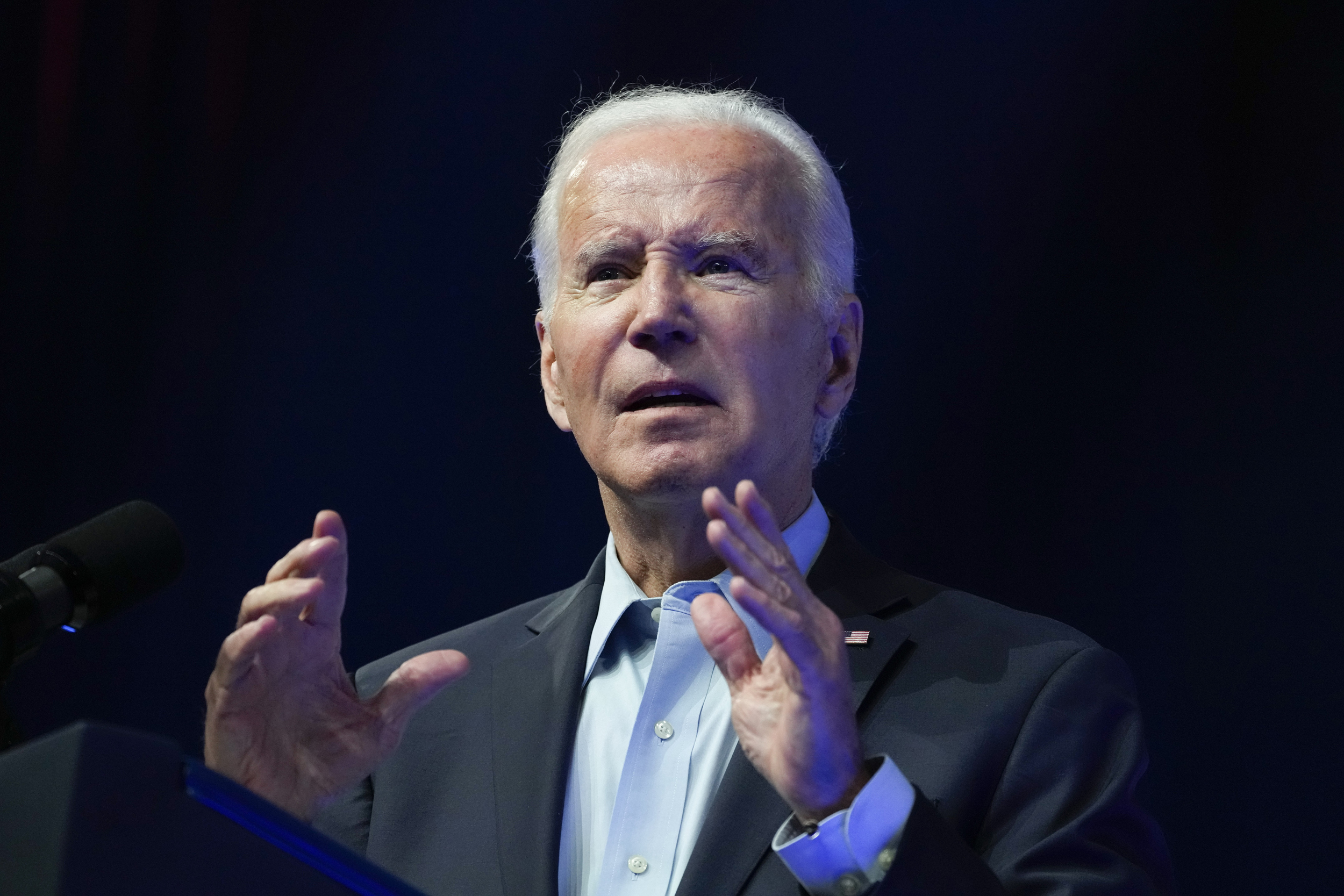
President Joe Biden met with artificial intelligence experts in San Francisco on Tuesday as part of his administration’s efforts to manage the risks posed by AI.
In brief remarks to reporters before the closed-door meeting, Biden said that he wanted to hear from the world’s leading experts on the issue, which he said poses “enormous promise” and “risks.”
“As I’ve said before, we will see more technological change in the next 10 years than we’ve seen in the last 50 years and maybe beyond that,” Biden said ahead of the event, which included Democratic Gov. Gavin Newsom of California and experts who recognize both AI’s potential risks and benefits.
“My administration is committed to safeguarding America’s rights and safety, from protecting privacy to addressing bias and disinformation, to making sure AI systems are safe before they are released,” Biden said.
He also argued that social media has shown the harm that powerful technology can do without safeguards in place, noting that he asked Congress during his State of the Union address to pass bipartisan legislation “to put strict limits on personal data collection, ban targeting and advertising to our children and require companies to put health and safety first.”
Vice President Kamala Harris next month will convene civil rights leaders and consumer protection groups to discuss AI issue, Biden announced on Tuesday.
In May, Harris hosted the leaders of several companies developing artificial intelligence products — including Google and Microsoft — at the White House, and the administration unveiled a $140 million investment in seven new AI research centers.
The Biden administration last year released a framework on mitigating threats posed by AI, and in February, Biden signed an executive order directing federal agencies to root out bias and promote equity in the design and use of new technologies, including AI.
“AI is a top priority for the President and his team,” a White House official said in a statement Tuesday.
Biden’s meeting on AI comes as the use of artificial intelligence has exploded in popularity. ChatGPT, an AI chatbot, has become a global sensation: It has passed an MBA final exam, raised concerns about academic cheating and helped people craft emails to their co-workers and loved ones.
But ChatGPT’s ascent has also brought concerns over the development of artificial intelligence to a fore, prompting Congress to scramble to understand and regulate the nascent technology.
Biden, citing AI experts he said he had met with, warned in a commencement speech this month that AI could “overtake human thinking” and “change the character” of future wars.
“So we’ve got a lot to deal with,” Biden told graduating students at the Air Force Academy. “An incredible opportunity, but a lot do deal with.”