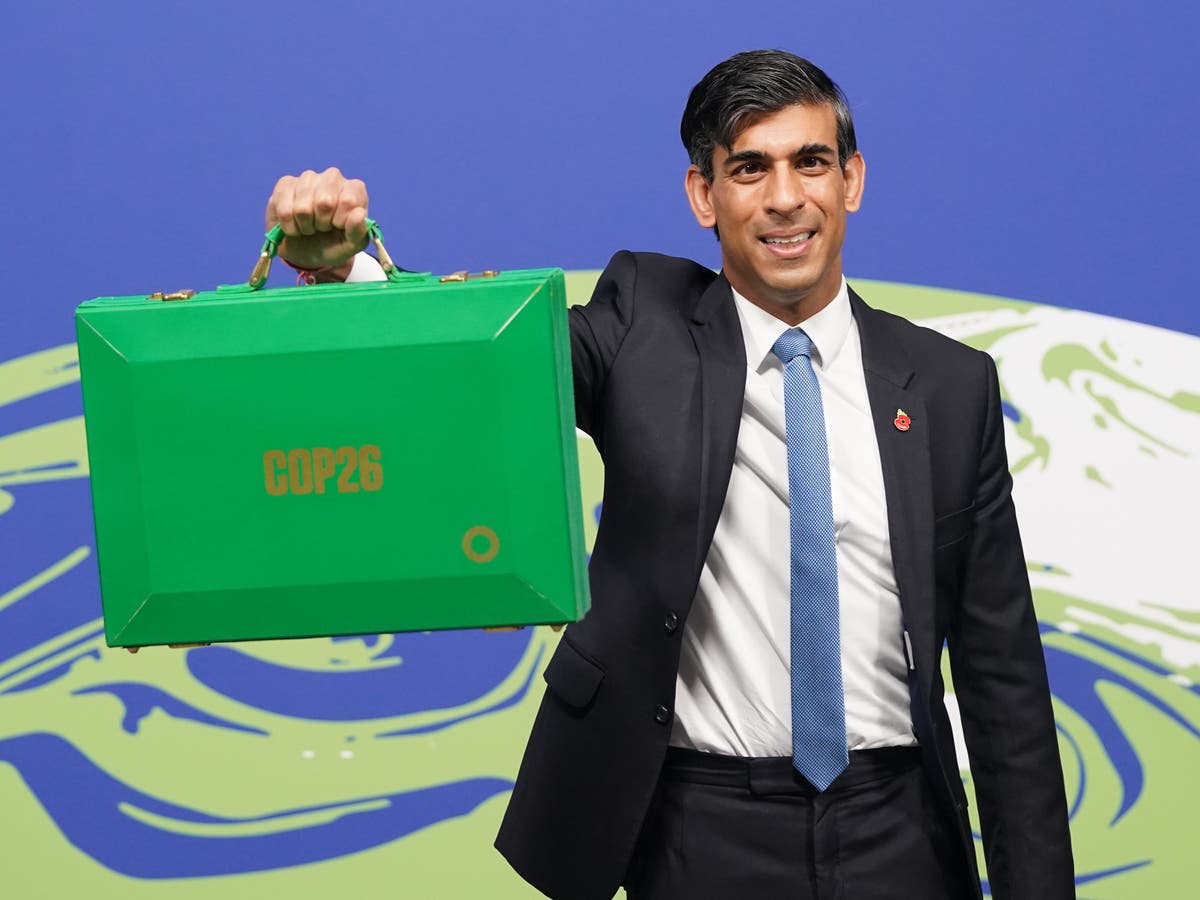
Not a single offshore wind farm has been commissioned in a key auction, dealing a blow to the Rishi Sunak’s promise to decarbonise the UK’s electricity production.
In the annual auction which lets companies bid to supply the grid with electricity, many onshore wind projects and solar farms bid to get a contract.
However, the government announced that no offshore wind contracts – seen as the backbone of the UK’s green electricity ambitions – were included this year.
Environmentalists called it a “complete flop” and a “monumental failure”, arguing that it left the UK more reliant on fossil fuels.
One industry source said: “There is no offshore wind and that’s the backbone of our transition to clean energy and attempts to stop using gas, which must be a worry for government.”
Greenpeace UK’s policy director, Doug Parr, said: “This monumental failure is the biggest disaster for clean energy in almost a decade.”
Labour shadow energy security and net zero secretary Ed Miliband said: “Ministers were warned time and again that this would happen, but they did not listen.
“They simply don’t understand how to deliver the green sprint, and Rishi Sunak’s government is too weak and divided to deliver the clean power Britain needs.”
Wind farm builders had warned for months that the government, which sets a maximum price that companies are allowed to charge, was not taking into account how much their costs had soared during the cost-of-living crisis, which has also pushed up prices for businesses.
“The economics simply did not stand up,” the boss of ScottishPower said on Friday after the result.
Energy and climate change minister Graham Stuart insisted that offshore wind remains “central to our ambitions to decarbonise our electricity supply”.
The minister added: “The UK installed 300 new turbines last year and we will work with industry to make sure we retain our global leadership in this vital technology.”
Companies found out on Friday whether they won new offshore contracts
(PA Archive)
The failure puts a major dent in ministers’ promise to deliver 50 gigawatts (GW) of offshore wind by 2030, from 14 GW today.
The government pointed to the fact that a record number of renewables were awarded funding from the auction. A total of 95 clean energy projects – including solar power and onshore wind – were successful in the £227m round, up from 93 in the previous round.
In a press release, the government said that the scheme was “set to deliver 3.7 GW of homegrown energy”. But it did not mention that last year’s auction granted contracts for 11 GW.
The UK has for years been a world leader in offshore wind, second only to China in the amount of power that its turbines can produce.
It has been a major British success story and helped customers save hundreds of millions of pounds during the recent energy crisis.
Ed Miliband said ministers were warned no new offshore wind was on the way
(PA Archive)
Producing offshore wind used to be expensive, but after years of innovation and building up scale, the price of supplying wind power to British homes had dropped dramatically.
New offshore wind turbines now produce electricity at a considerably cheaper rate than gas power plants. The price of gas has soared after Russia’s full-scale invasion of Ukraine.
Keith Anderson, the boss of ScottishPower, which is one of the key builders of wind power in the UK, said that offshore wind is still one of the cheapest ways to generate electricity.
“This is a multibillion-pound lost opportunity to deliver low-cost energy for consumers, and a wake-up call for government,” he said.
“ScottishPower is in the business of building wind farms and our track record is second-to-none in terms of getting projects over the line when others haven’t been able to. But the economics simply did not stand up this time around.”
Mr Parr of Greenpeaced said the auction round had “completely flopped” – leaving the UK “more dependent on expensive, imported fossil gas”
He said the government was “denying bill payers access to cheap, clean energy and putting the UK’s legally binding target of decarbonising power by 2035 in greater jeopardy”.