| Donald Crisp Quick Info |
| Height |
5 ft 9½ in |
| Weight |
74 kg |
| Date of Birth |
July 27, 1882 |
| Zodiac Sign |
Leo |
| Date of Death |
May 25, 1974 |
Donald Crisp was an English actor, director, producer, and screenwriter who enjoyed a prolific career in Hollywood by starring in notable films such as Broken Blossoms (1919), The Black Pirate (1926), Red Dust (1932), Mutiny on the Bounty (1935), The Life of Emile Zola (1937), Jezebel (1938), Wuthering Heights (1939), How Green Was My Valley (1941), National Velvet (1944), The Man from Laramie (1955), to name a few.
Born Name
Donald William Crisp
Nick Name
Donald
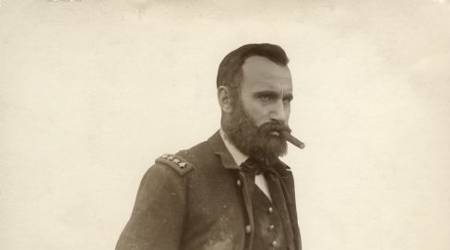
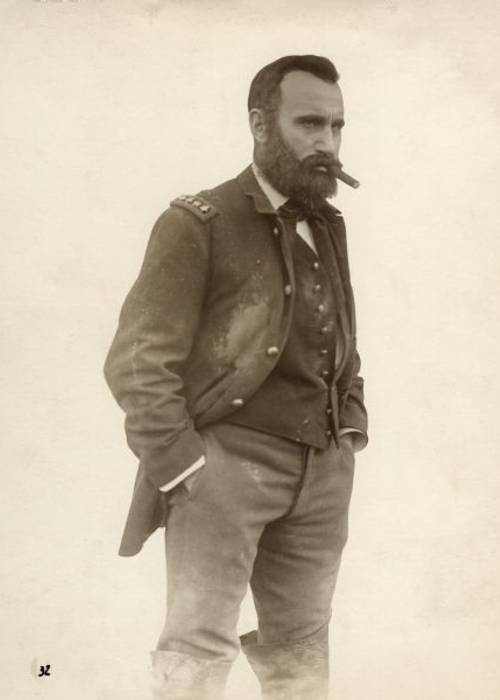 Donald Crisp seen wearing an U.S. Army uniform for his role as General Ulysses S. Grant in a publicity still for D. W. Griffith‘s 1915 film The Birth of a Nation (Wisconsin Center for Film and Theater Research / Wikimedia / Public Domain)
Age
He was born on July 27, 1882.
Died
On May 25, 1974, Crisp died at the age of 91 years in Los Angeles, California. His death was brought on by complications arising out of multiple strokes.
Sun Sign
Leo
Born Place
Bow, London, England, United Kingdom
Nationality

Occupation
Actor, Director, Producer, Screenwriter
Family
- Father – James Crisp (Laborer)
- Mother – Elizabeth Christy
- Siblings – He had 3 older brothers and 6 older sisters.
Build
Average
Height
5 ft 9½ in or 176.5 cm
Weight
74 kg or 163 lbs
Girlfriend / Spouse
Donald Crisp had dated –
Helen Pease (1912-1913) – He was married to Helen Pease from 1912 until her death a year later in 1913.
Marie Stark (1917-1920) – Marie Stark became his second wife in 1917. However, the two got divorced only 3 years later in 1920.
Jane Murfin (1932-1944) – He tied the knot with Jane Murfin, a playwright and screenwriter, on August 15, 1932. But, their marriage ended in divorce in 1944.
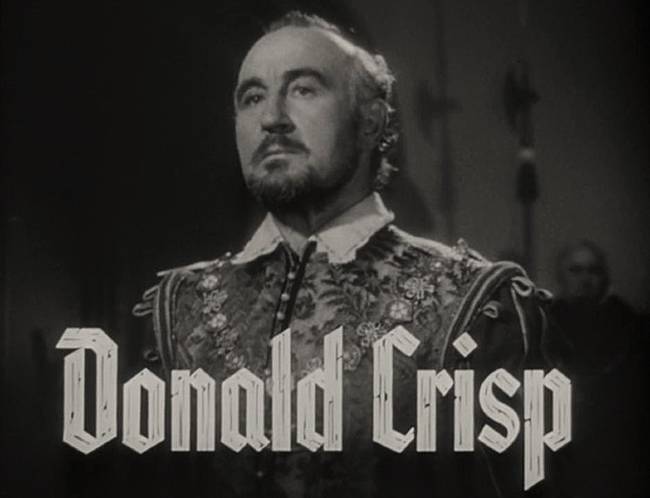 Donald Crisp as seen in a scene from the 1940 film The Sea Hawk (Film Trailer Screenshot (Warner Bros.) / Wikimedia / Public Domain)
Race / Ethnicity
White
He had English ancestry.
Hair Color
Dark Brown
However, his hair had turned ‘Gray’ by the time of his death.
Eye Color
Blue
Sexual Orientation
Straight
Distinctive Features
- Frequently played wise, proud, and strong-willed characters in films
- Soft, expressive voice
- Small mouth
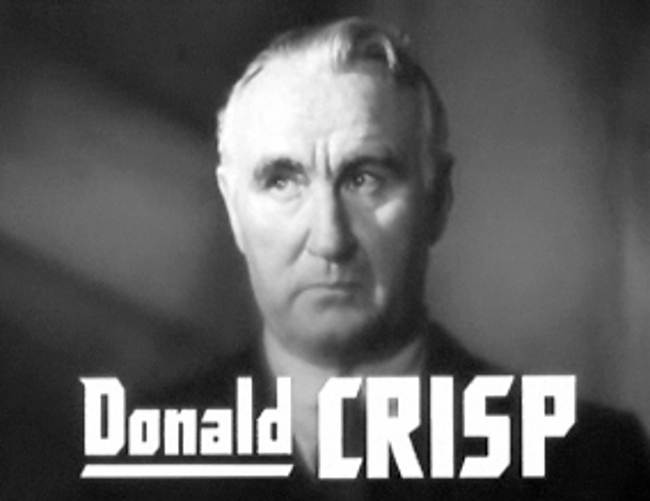 Donald Crisp as seen in the trailer of the movie Shining Victory (Shining Victory trailer screenshot / Wikimedia / Public Domain)
Donald Crisp Facts
Three of his films won the Academy Award for ‘Best Picture’: Mutiny on the Bounty (1935), The Life of Emile Zola (1937), and How Green Was My Valley (1941). Furthermore, his other two films, Jezebel (1938) and Wuthering Heights (1939) were Best Picture Oscar nominees.
Crisp served in the British Army Intelligence during World War I. Moreover, he attained American citizenship in 1930, years before the start of World War II. As a result, he served in the United States Army Reserve and reached the rank of colonel during the Second World War.
On February 8, 1960, he received his star on the Hollywood Walk of Fame and it can be found at 1628 Vine Street in Hollywood, California.
In 1942, Crisp won the Academy Award for ‘Best Supporting Actor’ for his stellar performance in How Green Was My Valley (1941). In his acceptance speech, he recounted that he had practiced accepting his Oscar by holding every lamp and statue available on the set of his film The Gay Sisters (1942) at the insistence of his co-star, Barbara Stanwyck.
The Library of Congress selected 13 of his films (as an actor) to be a part of the National Film Registry for being ‘culturally, historically or aesthetically’ significant. They are as follows: The Musketeers of Pig Alley (1912), The Birth of a Nation (1915), Intolerance (1916), Broken Blossoms (1919), The Black Pirate (1926), Red Dust (1932), The Life of Emile Zola (1937), Jezebel (1938), Wuthering Heights (1939), Knute Rockne, All American (1940), How Green Was My Valley (1941), Lassie Come Home (1943), and National Velvet (1944). Furthermore, also included in the registry is The Navigator (1924), which was directed by Crisp.
Featured Image by Wisconsin Center for Film and Theater Research / Wikimedia / Public Domain