Rishi Sunak’s government is reviewing the definition of extremism in a move that could allow councils and police forces to cut off funding to charities and religious groups found to have aired hateful views.
Levelling up secretary Michael Gove is understood to have ordered officials to draw up a new official definition of extremism in a move designed to counter hate, including antisemitism.
Separately, home secretary Suella Braverman is reportedly examining potential changes to terrorism legislation to expand some definitions in existing laws.
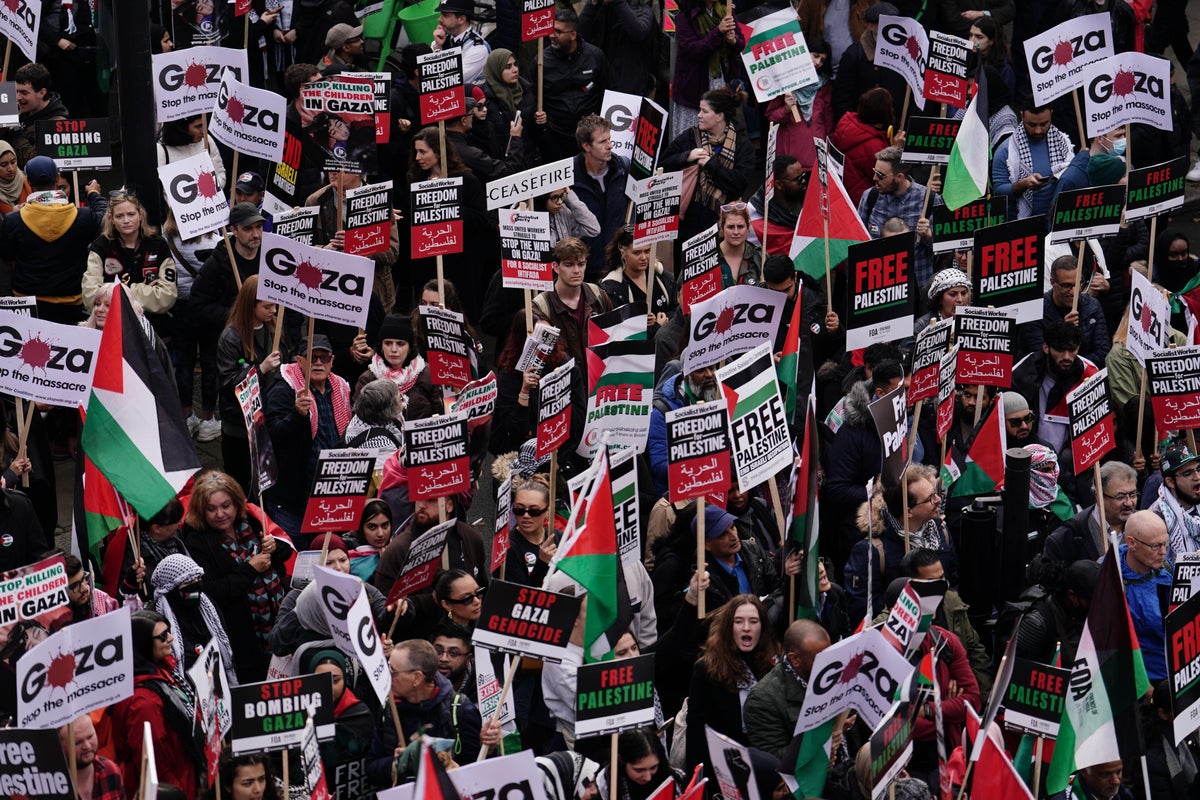
It comes after nine people were arrested in central London during a mainly peaceful pro-Palestine demonstration on Saturday – with at least 100,000 protesters calling for a ceasefire in the Israel-Hamas war.
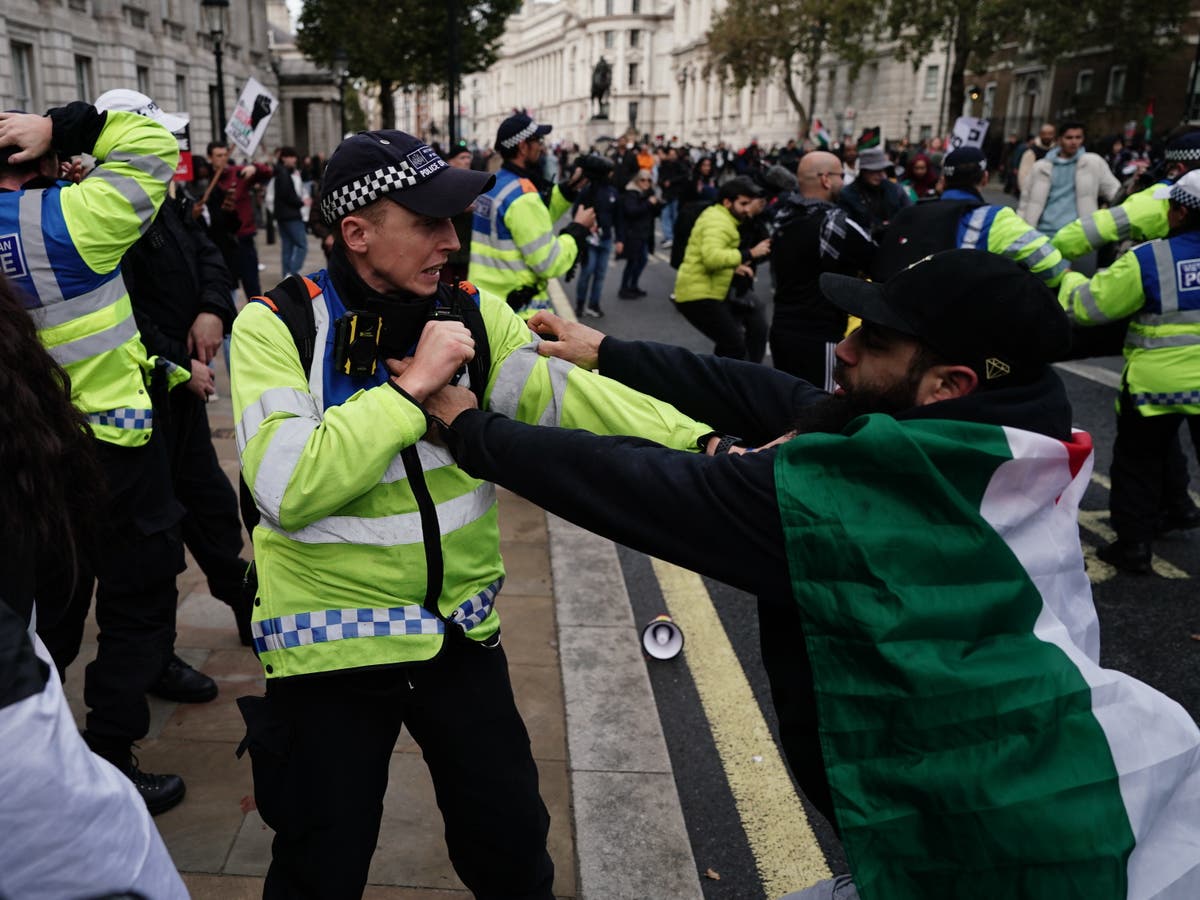
Seven of those were alleged public order offences, a number of which are being treated as hate crimes, while two are for suspected assaults on officers.
The Metropolitan Police on X, formerly Twitter, confirmed it was reviewing a potential “hate crime incident” in Trafalgar Square following chanting that referenced the Medieval Battle of Khaybar – referring to a massacre of Jews in 628 by Islamic forces.
Officers also followed-up on reports that a pamphlet was being sold along the route of the march that praised Hamas, the force confirmed on social media.
Cabinet minister Michelle Donelan said the current laws are “robust enough” – but did not deny ministers were reviewing the official definition of extremism as part of an attempted crackdown.
Pushed on whether the definition of extremism was being reconsidered, Ms Donelan said: “Everything is always kept under constant review … we believe the existing law is robust enough and the police should be applying that in these circumstances.
Police officers clash with rival supporters in Whitehall on Saturday
(PA)
The science secretary added: “Of course if we feel over the coming weeks that that is not enough, what I’m saying is that of course we would [take further action].”
Ms Donelan also said she thought “personally” that some pro-Palestinian protesters were “inciting hatred”, as she suggested police do more to clamp down on any support for Hamas – a proscribed terrorist group.
Asked on Sky News whether some protests have crossed the line, she said “Yes” and mentioned activists holding images of Hamas paraglides. “That is inciting hatred. I personally think it is inciting hatred, and is something the police should be looking at.”
In a development first reported by the Sunday Telegraph, officials in the Department for Levelling Up, Housing and Communities are examining a suggested new definition of hateful extremism.
But The Independent understands that the work started before Hamas’ deadly attack on Israel on October 7 during which terrorists killed 1,400 people.
Michael Gove’s department looking a changes to extremism definition
(PA)
A new definition of extremism allow the government to alert local authorities and other public bodies like charities regulator to look at groups at risk of violating the rules. The Whitehall department is considering definitions published in 2021 as part of a report Met commissioner Sir Mark Rowley was involved with.
The report urged ministers to do more to eradicate extremism, with the official watchdog, the Commission for Countering Extremism, concluding then that gaps within current legislation had left it harder to tackle “hateful extremism”.
Separately, the Home Office is examining potential changes to terrorism legislation, the Telegraph reported. Lord Carlisle, former independent reviewer of terrorism legislation, suggested police were still not making proper use of existing laws – such as 1986 Public Order Act – to tackle Islamist extremists.
The pro-Palestinian protests in the UK took place against a backdrop of a worsening picture in the Middle East. Israeli PM Benjamin Netanyahu told his nation that the military has opened a “second stage” in the war against Hamas by sending ground forces into Gaza.
A No 10 source said Mr Sunak had been briefed on developments in the war throughout the weekend. The increase in fighting has put pressure on Labour leader Sir Keir Starmer to change his stance on the conflict and back a ceasefire.
Some 13 frontbenchers are now opposed to Mr Starmer’s refusal to back a ceasefire. Labour MPs have told The Independent that at least 100 of Sir Keir’s MPs – half his parliamentary party – want him to change position.
Sir Keir’s team declined to answer when asked if the frontbenchers pushing publicly for a ceasefire – including shadow Home Office minister Jess Phillips and shadow solicitor general Andy Slaughter – would be able to remain in post.