
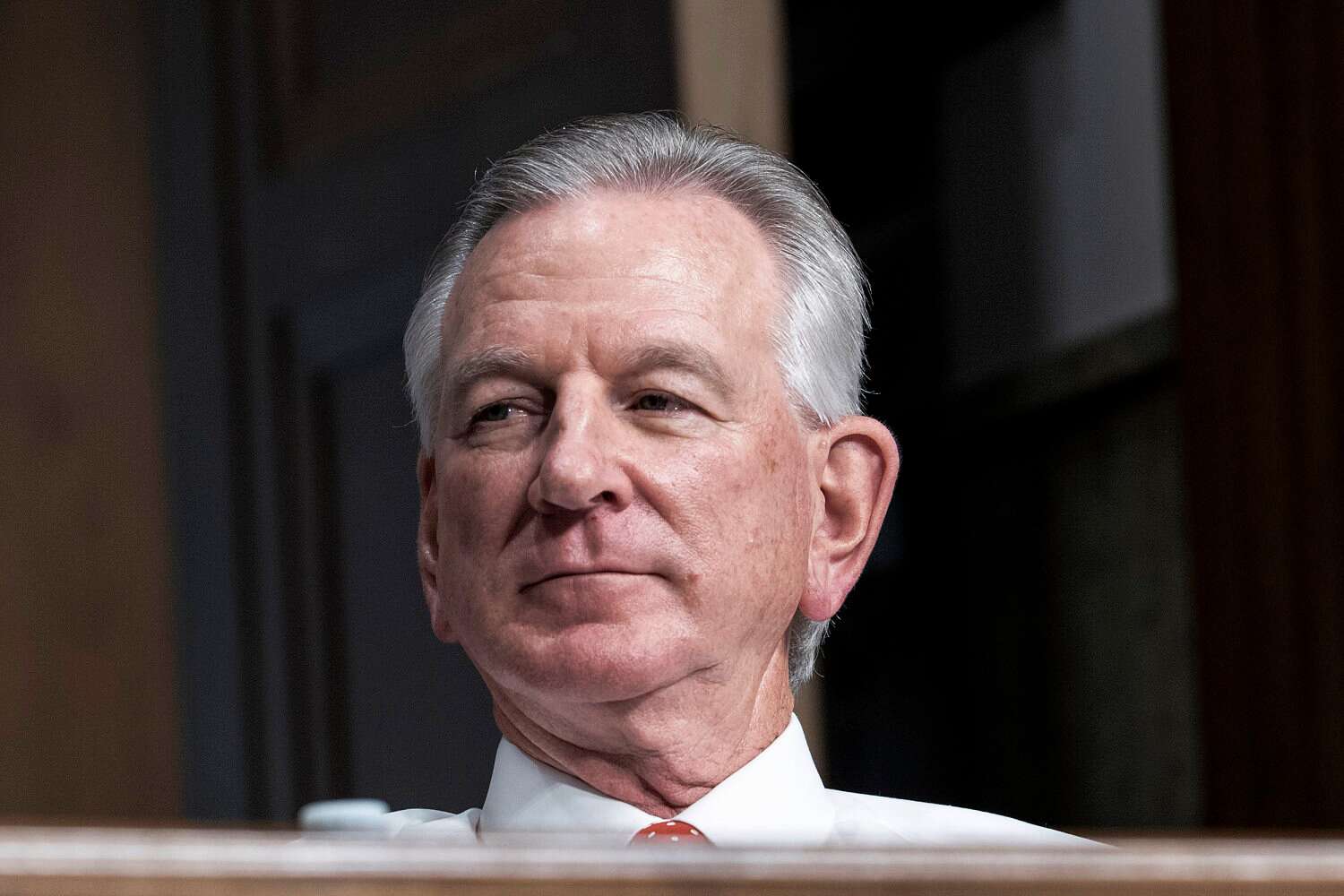
WASHINGTON — The office of Sen. Tommy Tuberville, R-Ala., said he isn’t backing down on his monthslong blockade on hundreds of military promotions, even amid Hamas’ deadly attack on Israel, a close U.S ally.
“The Pentagon clearly thinks forcing taxpayers to facilitate abortion is more important than confirming their top nominees without a vote. They could end this situation TODAY by dropping their illegal and immoral policy and get everyone confirmed rapidly, but they refuse,” Tuberville spokesperson Steve Stafford said in a statement to NBC News. “If the Biden administration wants their nominees confirmed then Senate Democrats can do what Coach just did in September and file a cloture petition to force a vote.”
The news was first reported by Politico.
Hundreds have died amid the ongoing battle Hamas launched against Israel over the weekend, with Hamas fights having also taken hostage of a number of civilians and soldiers. The State Department is working to verify reports that Americans were killed and taken hostage, Secretary of State Antony Blinken said Sunday on NBC News’ “Meet the Press.”
The Biden administration has stated its support for Israel. As the conflict stretched into Day 2, Defense Secretary Lloyd Austin announced Sunday that the U.S. military is moving an aircraft carrier strike group and military aircraft closer to Israel as a show of support, and will also supply Israel with munitions and other military supplies as soon as possible.
Tuberville’s military blockade has put a hold on at least 300 military nominees, including top officers that would command forces in the Middle East. The Republican senator said his effort is in protest of the Defense Department policy that gives time off and reimbursements for service members and their family members seekings abortions out of state.
Democrats and the White House have condemned Tuberville’s use of a procedural tactic to clog up the confirmation of military officials as a threat to the military’s preparedness. He cannot actually block the Senate from processing any promotion, but his hold has dramatically slowed down a process that’s typically done without a vote.
Tuberville and some Republicans have argued that Senate Majority Leader Chuck Schumer, D-N.Y., could call each of the hundreds of military nominees for individual votes — a process that would take hundreds of hours of floor time for each nominee.
The Senate last month employed that tactic to confirm its first military nominees in months — Air Force Gen. Charles Q. Brown Jr. as the nation’s top military officer, Gen. Randy George as Army Chief of Staff and Gen. Eric Smith as commandant of the U.S. Marine Corps.
Brown’s confirmation vote came four months after President Joe Biden nominated him to the post. Brown is set to succeed Army Gen. Mark Milley, whose term ends this month.
To expedite the process and confirm the nominees en bloc, it would require unanimous consent from all 100 Senators — something that will not exist unless and until Tuberville lifts his hold over the Defense Department’s abortion policy.
Another option the Senate could use to get around Tuberville’s blockade, in theory, is to vote to change the rules and make a one-time exception. That would require two-thirds of the Senate, or 67 votes, and it’s unclear whether this would happen.
Schumer’s office did not immediately respond to a request for comment.