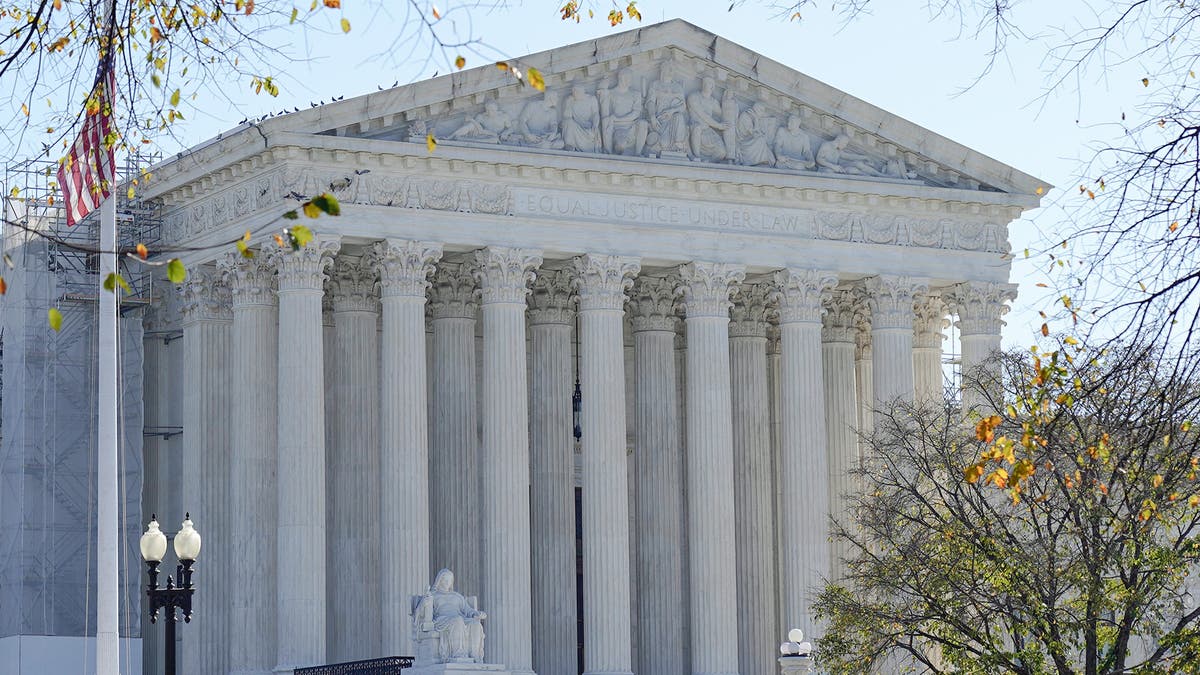
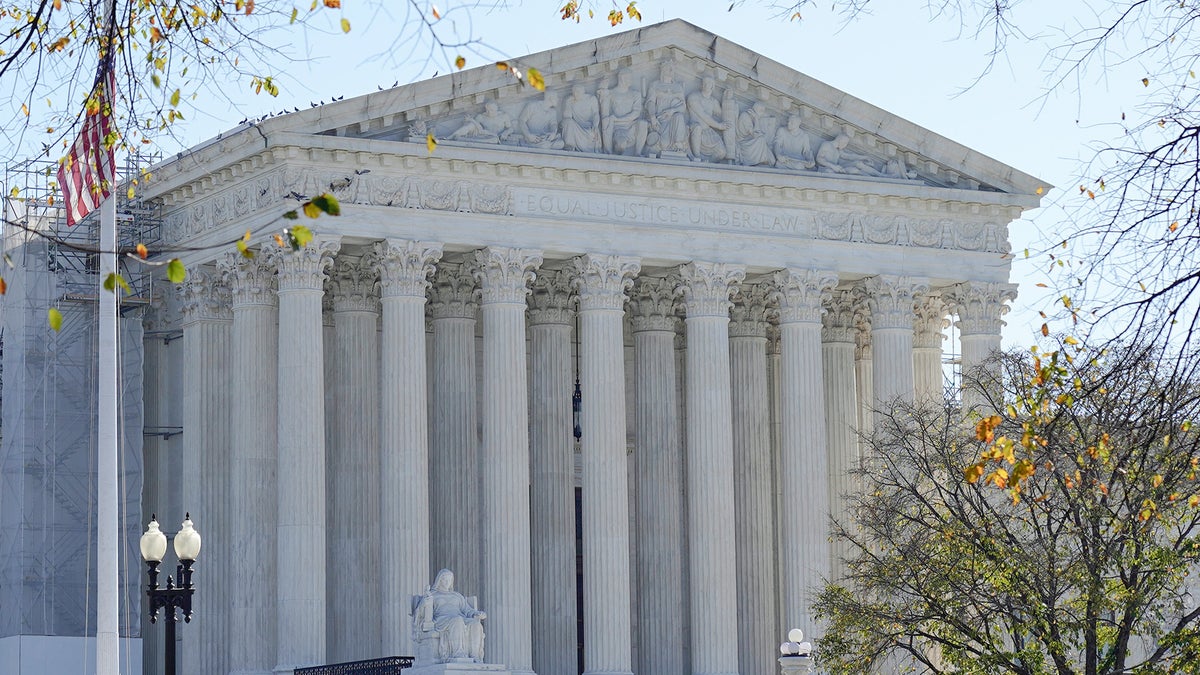
The Supreme Court appears likely to uphold a law that would keep firearms out of the hands of domestic violence offenders, after the justices heard two hours of arguments in another major Second Amendment case.
A decision in the case of United States v Rahimi — which is expected in late June — could have profound impacts on the ways courts and law enforcement protect abuse survivors, as states wrangle with patchwork laws restricting gun ownership in the face of the nation’s gun violence epidemic.
The justices seemed to lean into the government’s argument of an established precedent of firearm restrictions around identified dangerous individuals — by contrast, they appeared lost in Zackey Rahimi’s lawyer’s muddled argument.
The justices initially focused on the definitions of “responsible” and “law-abiding” in the government’s arguments.
Solicitor General Elizabeth Prelogar said that she was employing those terms because this was the language used and the “standard this court has articulated” in previous gun-related cases.
Justice Ketanji Brown Jackson also wondered why the government was harkening back to the founding era, when laws around domestic violence and other now well-known gun dangers, like permitting firearms in schools, had yet not been established.
Replying to this concern, Ms Prelogar said, “Throughout our nation’s history, legislatures have disarmed those who have committed serious criminal conduct or whose access to guns poses a danger. For example, loyalists, rebels, minors, individuals with mental illness, felons and drug addicts.”
Michael Wright, Rahimi’s lawyer, seemed to confuse the justices with his argument.
Zackey Rahimi pleaded guilty to violating a law that required him to relinquish his firearm because he had been subject to a two-year restraining order. Rather than giving up his gun, he was involved in five shootings in a two-month span.
Rahimi argued that this law violates his constitutional right to own a firearm. After a conservative federal appeals court initially affirmed the initial judgment in the case, it withdrew its initial opinion 15 days after the Supreme Court handed down a major decision in a landmark Second Amendment case. The 2022 ruling in New York State Rifle & Pistol Association v Bruen has changed — if not confused — the way that courts across the country analysed gun laws.
“You don’t have any doubt that your client is a dangerous person, do you?” Chief Justice Roberts asked Mr Wright.
At one point, Mr Wright said he would like to “know what ‘dangerous person’ means.”
Chief Justice Roberts then retorted, “Someone who is shooting at people. That’s a good start.”
Mr Wright also said that there was no historic tradition that resulted in a firearm ban for those who are not convicted felons. He added that while society understood dangerous people, it “rejected the disarmament principle” that this law includes.
However, his argument became less clear when Justice Amy Coney Barrett mentioned Rahimi’s specific restraining order on its own – regardless of the law in question – which stated that he had to give up his gun. She suggested that this firearm relinquishment requirement was built in.
After a court proceeding, “if the finding was that nothing short of surrender of firearms, that would be constitutional,” he replied.
Perhaps in a well-articulated culmination of the justices’ confusion, Justice Elena Kagan called Mr Wright’s argument “untenable,” adding that she thought he was “running away from the argument.”
She continued, “It just seems to be that your argument applies to a wide variety of disarming actions, bans, that we take for granted now, because it’s so obvious that people who have guns pose a great danger to others and you don’t give guns to people who have a history of domestic violence … or the mentally ill, or what have you.”
Rahimi marks the first major gun case to come before the conservative court this year, and potentially gives the court an opportunity to clarify Bruen.
Ms Prelogar addressed this in her rebuttal. This case is based on a “profound” misreading of Bruen, she said, adding that once the Court “corrects the misinterpretation of Bruen, you can disarm dangerous individuals.”
In a succinct and eloquent summary, she argued “it’s an easy case” for three reasons. First, protective orders – and the subsequent firearm relinquishment mandate – “requires individualised findings of dangerousness.”
Second, there is “legislative consensus,” as 48 states and territories share the view that disarmament is an appropriate response to protecting domestic violence victims, the solicitor general continued.
And third, Ms Prelogar said disarming abusers “guards against profound harm,” pointing to harrowing evidence that highlights the perilous combination of gun ownership and domestic violence. Not only are women five times more likely to be murdered if her partner has access to a gun, but domestic violence calls are most dangerous for police to respond to, she said.
Gun safety groups have already reacted to the oral arguments.
“Removing firearms from people under qualifying domestic violence restraining orders is common-sense, life-saving, and consistent with the Constitution, and that is what the Solicitor General argued today,” according to a statement from Douglas Letter, chief legal officer of Brady United Against Gun Violence.
“If the Fifth Circuit’s ruling is allowed to stand, survivors and those at risk of domestic violence, including countless children, will be in incredible danger,” he added. “The Supreme Court must now decide if it stands with victims of domestic abuse or a warped and distorted view of the Second Amendment constructed by the gun industry, which will only lead to more violence, particularly against women and children.”
Angela Ferrell-Zabala, executive director of Moms Demand Action, said in a statement that it is “crystal clear that “arming domestic abusers under restraining orders would be an outrageous, devastating and lethal mistake.”
“If the Supreme Court rules to arm abusers, it would mean that the nation’s highest court has put women and families across the country in danger, forcing survivors to live in fear that their abusers can get access to deadly weapons,” she added. “The Supreme Court cannot allow domestic abusers a blank check to buy and possess guns. It must overturn the Fifth Circuit’s decision.”