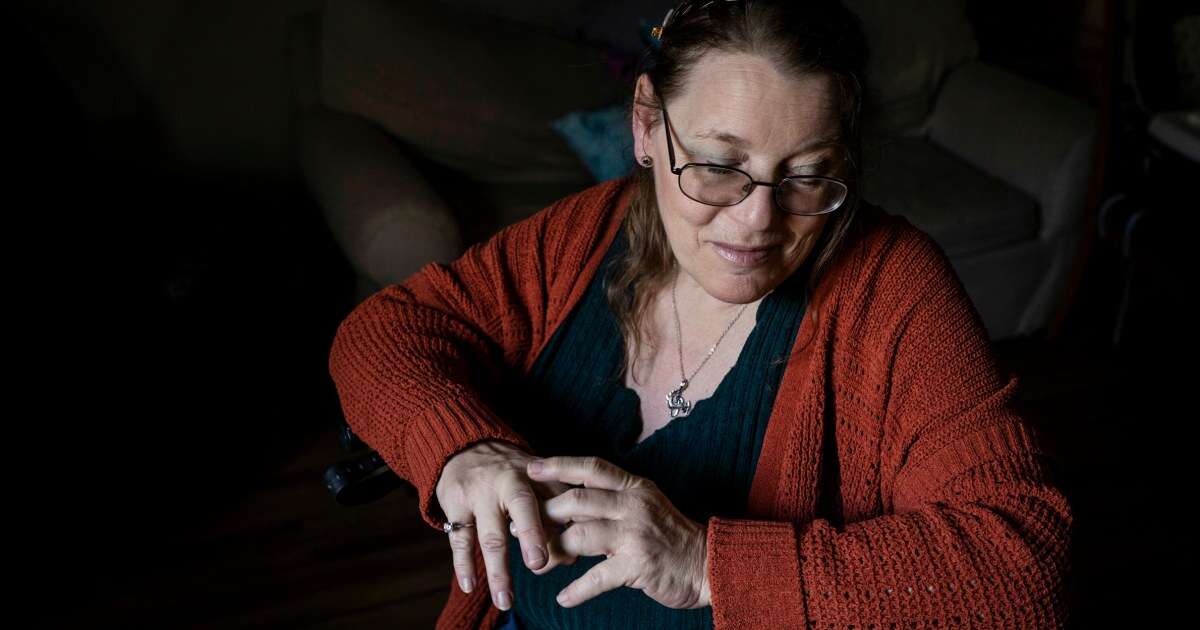
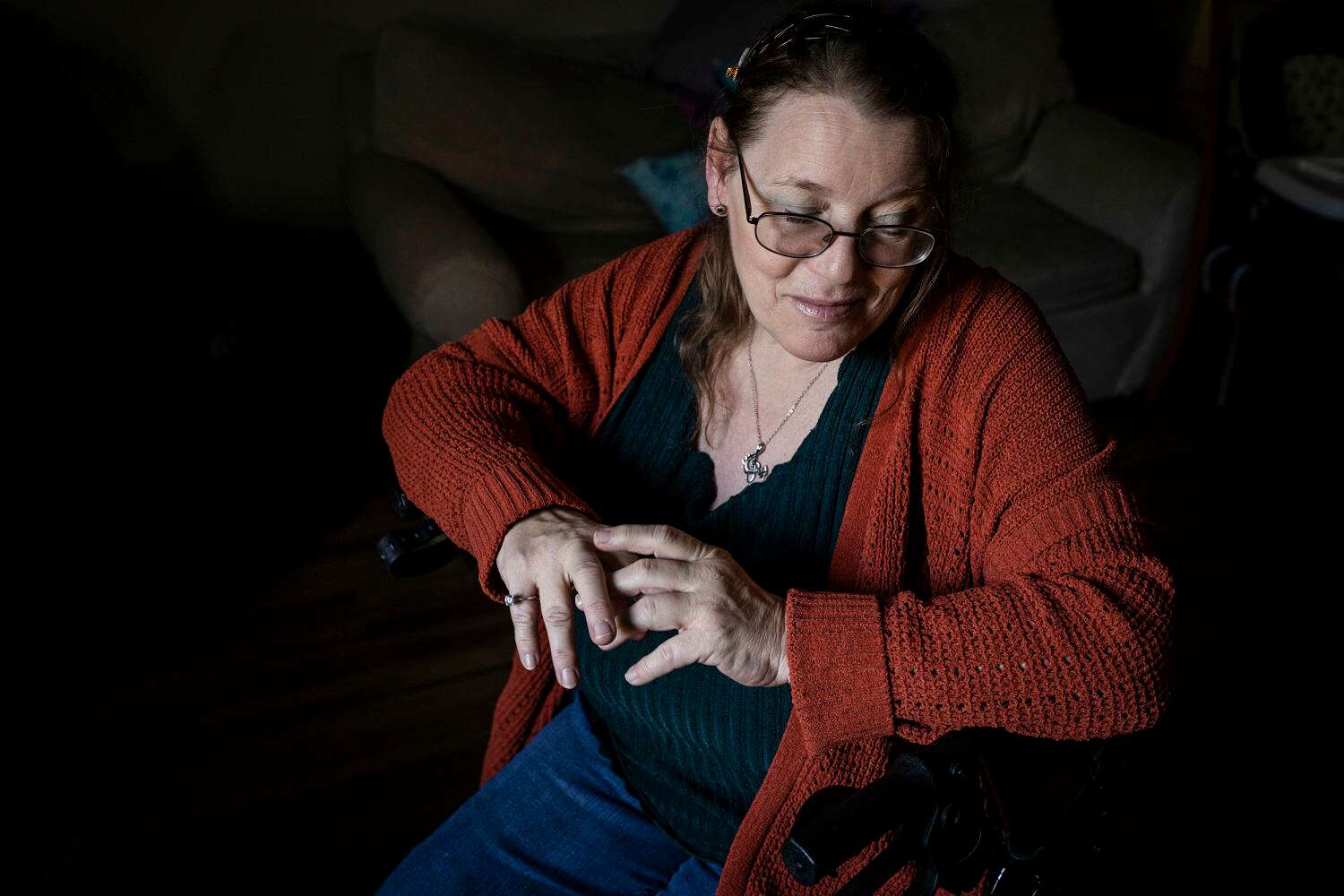
WASHINGTON — The Supreme Court on Wednesday grappled with whether a disability rights campaigner can sue hotels for failing to disclose accessibility information if she doesn’t plan to actually book a room.
The case involving activist Deborah Laufer could curtail the ability of “testers” to bring lawsuits aimed at benefitting the disabled community as a whole by ensuring that hotels comply with the Americans with Disabilities Act, known as the ADA.
During the oral argument, some justices appeared skeptical that Laufer faced discrimination just from searching online to see if the hotel listed accessibility information.
Lurking in the background is another legal question on whether the Supreme Court should even decide the case, in part because Laufer has since withdrawn her lawsuit and the ownership of the hotel in question has changed. It was unclear whether the justices would take that approach, which would leave the broader legal issue unresolved.
The court heard an appeal brought by Acheson Hotels, which operated the Coast Village Inn and Cottages in Maine at the time the lawsuit was filed. The hotel’s lawyers argued that Laufer does not have legal standing to bring the cases because she has no intention of staying at the hotels.
Laufer, who is disabled and uses a wheelchair, said in her 2020 lawsuit that the hotel’s website did not identify accessible rooms and did not provide other relevant information.
But she had failed to show that she suffered an injury, a requirement necessary to establish standing, the hotel’s lawyers argued.
During the argument, justices debated what plaintiffs like Laufer would need to allege to show that they have suffered an injury, including whether they would need to try to book a room or have a concrete plan to visit the area where the hotel is located.
Conservative Justice Neil Gorsuch suggested that “spending the afternoon clicking around” online was not sufficient to establish standing.
Justice Brett Kavanaugh, another conservative, expressed similar sentiments, wondering whether it is possible to “experience discrimination when you go to website.”
On the other hand, liberal Justice Ketanji Brown Jackson brought up the civil rights movement and questioned whether under the approach suggested by other justices a Black person who witnessed a restaurant refusing to serve Black people would be able to sue without personally trying to sit down and order food.
Justice Sonia Sotomayor, one of Jackson’s liberal colleagues, appeared sympathetic to the idea that Laufer would have been injured purely by lack of accessibility information on the hotel website.
“I thought discrimination means I am being treated differently than other people,” she said.
A federal district court threw out Laufer’s lawsuit on standing grounds, but in a 2022 ruling the Boston-based 1st U.S. Circuit Court of Appeals revived Laufer’s claim.
Acheson’s lawyers noted in court filings that Laufer has filed more than 600 lawsuits targeting small hotels and bed-and-breakfasts. Litigation costs can be substantial for small businesses facing such claims, they said.
Laufer’s lawyers countered in their own court papers that the language of the ADA allows for anyone who is disabled and therefore subject to discrimination on that basis to sue if an entity has violated the law.
Without such lawsuits, hotels would have no incentive to comply with the ADA, the lawyers said.
The Biden administration has sided with the hotel on that point in a brief filed in the case, with Solicitor General Elizabeth Prelogar writing that, by only viewing hotel information, Laufer had not suffered an injury.
But Prelogar defended the ability of testers to enforce civil rights laws more generally, citing a 1982 case in which the Supreme Court upheld the ability of testers to bring lawsuits challenging housing discrimination.