
Many perfume enthusiasts often find themselves asking, “Why does my perfume smell go away so quickly?” It’s a frustrating experience, especially when you’ve invested in a scent you love.
The longevity of a perfume’s fragrance can be influenced by various factors, from its composition to the way it’s applied and stored. Now, we’ll explore the possible reasons behind this swift scent dissipation and offer insights into how you can make your fragrance last longer.
Perfume Composition and Its Impact
The concentration of a perfume is a major factor in determining its longevity. One such example is Santal 33 Dupe. Perfumes come in various forms like eau de toilette, eau de parfum, and parfum, with varying concentrations of fragrance oils.
Eau de toilette, for instance, typically has a lower concentration of fragrance oils (around 5-15%) and tends to evaporate faster. In contrast, eau de parfum, with higher oil content (15-20%), will generally last longer on the skin.
Quality of Ingredients
When considering a popular fragrance, its dupe versions might offer a similar scent but can differ vastly in ingredient quality. The longevity of a fragrance is closely tied to the quality of its ingredients. Original fragrances are often formulated with high-quality oils that have a more enduring scent. Synthetic or lower-quality oils negatively affect the fragrance longevity after application.
Application Techniques and Their Effects
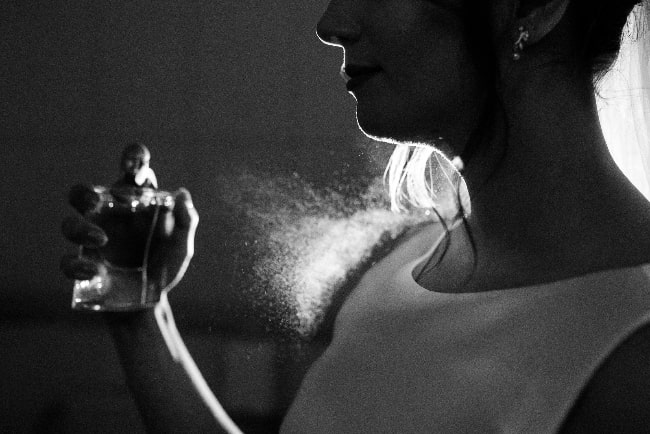
The way you apply your perfume can also impact its staying power. Spraying it on pulse points such as the wrists and neck, where the skin is warmer, can help release the fragrance throughout the day. However, rubbing the perfume into the skin can break down the fragrance molecules, causing the scent to fade faster.
The Impact of Skin Type
Your skin type plays a crucial role in how a perfume smells and lasts on you. Oily skin types tend to retain fragrances longer due to the natural oils that help to hold the scent. For those with drier skin, the perfume may dissipate more quickly. Moisturizing the skin before applying perfume can help extend its longevity.
External Factors Influencing Perfume Longevity
Now let us take a look at some external factors.
1. Environmental Influences
The environment you’re in can affect how long your perfume lasts. High humidity can intensify a fragrance, while a dry climate can cause it to evaporate more quickly. Adjusting the type of fragrance you wear according to the weather can help maintain its presence.
2. Interaction with Other Products
Layering scents with other products, such as body lotions or oils, can either enhance or shorten the life of your perfume. Using unscented or complementary scented body products can help avoid scent clashing and ensure your perfume stands out.
3. Storage and Care of Perfumes
How you store your perfume can significantly affect its lifespan. Exposure to direct sunlight, heat, and humidity can break down the fragrance oils, altering the scent and reducing its longevity. Storing perfume in a cool, dry place, away from direct light, can help preserve its original quality.
The Bottom Line
The quick dissipation of perfume scent can be attributed to several factors, including the fragrance’s concentration, the quality of ingredients, application methods, skin type, environmental conditions, and storage practices. By understanding these factors and adjusting your perfume use accordingly, you can enhance the longevity of your favorite scents and enjoy them throughout the day.